PINF Programmes Officer Neha shares five novels about journalism that felt surprisingly relevant to life at PINF.
A few weeks into this job, I found myself doing what I assume a lot of others do when they start somewhere new: reading everything I could about the thing I’d just joined. A lot of it was nonfiction, i.e. reports, policy papers, back issues of this blog, the UK-journo canon, et cetera. As a reward for this, I kept turning to novels about journalism to read in my spare time. Whether that counts as a busman’s holiday or genuine leisure I’ll leave to you, but the five below kept throwing up questions that felt directly relevant to what PINF is working on across our three main strands. Worth a read, especially if you’re on public transport en-route to Belfast for our Local News Forum tomorrow!
Bel-Ami: Guy de Maupassant (1885)
Georges Duroy, a penniless ex-soldier, talks his way into a Paris newsroom and rises fast, discovering along the way how tightly journalism at La Vie Française is entangled with the financiers and politicians who fund it. Read now, the novel works sort of like a founding case study on editorial independence, where Maupassant showcases what happens to reporting when ownership and patronage are allowed to run unchecked and shape coverage through growing monopolies. Duroy isn't punished by the narrative for exploiting this, which is, I suppose, the point. The book seems less interested in condemning a single opportunist than in mapping the structural conditions that let opportunism flourish, conditions that any conversation about sustainably trustworthy local news still has to reckon with.
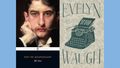
Scoop: Evelyn Waugh (1938)
The joke of a narrative, in which a newspaper sends a nature columnist to cover a war because two men share a surname, has probably aged better than the fictional war itself, which in itself is an eye-twitchy slapstick colonial conflict in an invented African state that Waugh renders with more than a little casual contempt typical of his more… traditionalist writings.
But beneath the colonial veneer and the comedy of mistaken identity is a rather useful warning about how proximity to an event isn't the same as understanding it, and how the pressure to file something (anything!) can crowd out the need to get a story right for the people it’s about. Waugh, who briefly covered the war in Abyssinia, is surprisingly merciless about that gap in an nearly Orwellian sense, and the underlying message continues to be at the heart of good public interest reporting in present-day as much as in 1938, when speed and volume threaten to outrun accuracy and context in the shadow of near-mythic ‘world-swallowing’ global events.
The Quiet American: Graham Greene (1955)
Thomas Fowler, a British journalist in Saigon, insists he doesn't take sides: according to the fellow in question, he's an observer whose role is more filing copy and less acting on news. Greene's novel, however, tests the claim of its own protagonist against the reality of Indochina's swift unraveling, in what I find to be one of the most interesting literary treatments of a question that matters enormously to public interest journalism.
What does true accountability require of a reporter, and where does detachment shade into abdication?
Fowler's neutrality turns out to be harder to sustain, and more consequential than he admits. Curiously, Greene’s novel seems to anticipate the American idealism that would follow into Vietnam, prematurely embodied in Alden Pyle, whose single-minded conviction comes to prove even more dangerous than Fowler's world-weary cynicism, which makes the whole thing very interesting to read in retrospect. It's a novel that takes the ethics of ‘bearing witness’ seriously, which is possibly why the perspective continues to endure today.
The Imperfectionists: Tom Rachman (2010)
Structured as a series of interlocking stories, each centred on a different staffer at a struggling Anglophone paper in Rome, Rachman's novel is a composite portrait of what's lost when a public-minded institution can no longer sustain itself. For instance, the corrections editor shackled to precision, and the obituary writer who has never had one of her own. Chapters tracing the paper's idealistic founding are woven through its present-day decline and the effect comes close to elegy, or at least a a reminder of just how much institutional memory (ie: the lack of it) and public purpose is entangled and bound up in a newsroom, and how much is at stake when that newsroom disappears. I found it essential reading when it comes to thinking about the sustainability of local and independent news today, and the importance of news itself being more cacophony than choir.
The Journalist and the Murderer: Janet Malcolm (1990)
The sole nonfiction entry (I know I said novels, but this is written almost like one!), and possibly the most rigorous of the five. Malcolm's famous opening line, that every journalist who isn't too self-absorbed to notice knows something uncomfortable about the work, sets up a rather forensic account of writer Joe McGinniss's relationship with convicted murderer Jeffrey MacDonald, whom McGinniss befriended while researching a book that ultimately portrayed him as guilty and manipulative.
Malcolm uses the case to ask a question that sits at the center of ethical reporting: what is owed to a subject once their trust has been used to tell their story? It has become a touchstone in journalism ethics (hence you might have read it already!) because it takes the method of reporting as seriously as the outcome of it, which is a distinction that matters to anyone committed to reporting that is both impactful and trustworthy.
Together, I found these five just as useful as all my policy-and-theory reading because while none of these books are particularly flattering about the industry itself, they (either accidentally or on purpose) agitate at the structural conditions that make good journalism possible or impossible, and also continuously call to mind the ethical debts that might end up accumulating along the way. Which feels, at the moment, like exactly the right thing to be thinking about.
Written by