PINF Programmes Officer Neha shares an overview of the fifth Local News Forum in Belfast, featuring reflections on the panel discussions, and photographs from across the weekend.
Last weekend, we brought together local news publishers, journalists, researchers, civic interest groups, funders and others working across the sector for the fifth Local News Forum, held this year at the MAC in Belfast. Over two days, we heard from people working to strengthen local journalism in different ways, exchanged ideas, caught up with familiar faces and welcomed plenty of new ones. The conversations ranged from public funding and the future of independent news to community cohesion, representation and the changing digital landscape, with some distinctly Northern Irish perspectives along the way. Here’s a by-no-means-exhaustive list of some of the discussions that stayed with us.
After a newsroom tour of The Irish News, Trevor Birney and Denzil McDaniel kicked off the Forum with the history of Northern Ireland’s press, before moving on to the occupational reality of local journalists living among the people they cover, where you might investigate a councillor on Tuesday and find yourself standing behind them in the supermarket on Thursday. Acknowledging how such familiarity can complicate professional independence, especially where power runs through longstanding personal and communal loyalties, the two pointed out how it can also supply knowledge difficult to acquire on a brief reporting visit, like a feel for what is being withheld in an official account, or the local manifestations of national issues.
A penny-drop moment for me was listening to Denzil McDaniel, former editor of the Impartial Reporter, discuss the role of local news in covering the 1987 Enniskillen bombing — a time of extreme tension when some realistically feared civil war. To reflect on that past, in today’s context of the seeming rise of polarisation and extremism across the UK, was helpful: we have been here before, we know the positive role impartial journalism can play. That opening talk set the scene for several valuable lessons journalism in Northern Ireland can teach the rest of the UK.
Joe Mitchell, Deputy Director
Birney also wondered whether the Good Friday Agreement could have been negotiated in the present social-media climate, pointing out how such negotiations require room for uncertainty and nuance and that instant circulation of compromises to audiences primed to interpret it as total surrender or aggression might impact the direction of the negotiations themselves. It was an arresting counterfactual, inviting us to consider how much ‘top-level politics’ depends on the wider information environment.
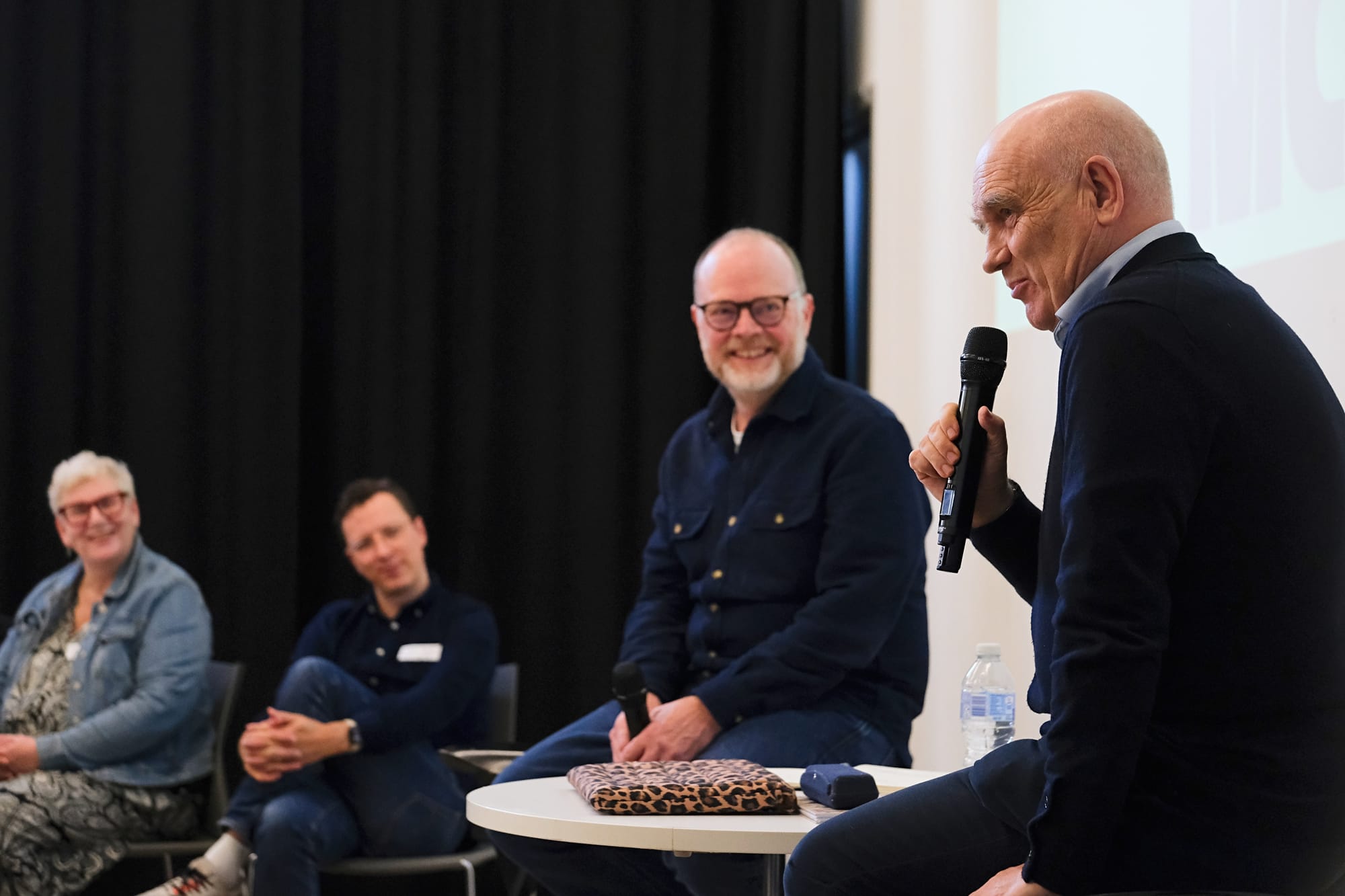
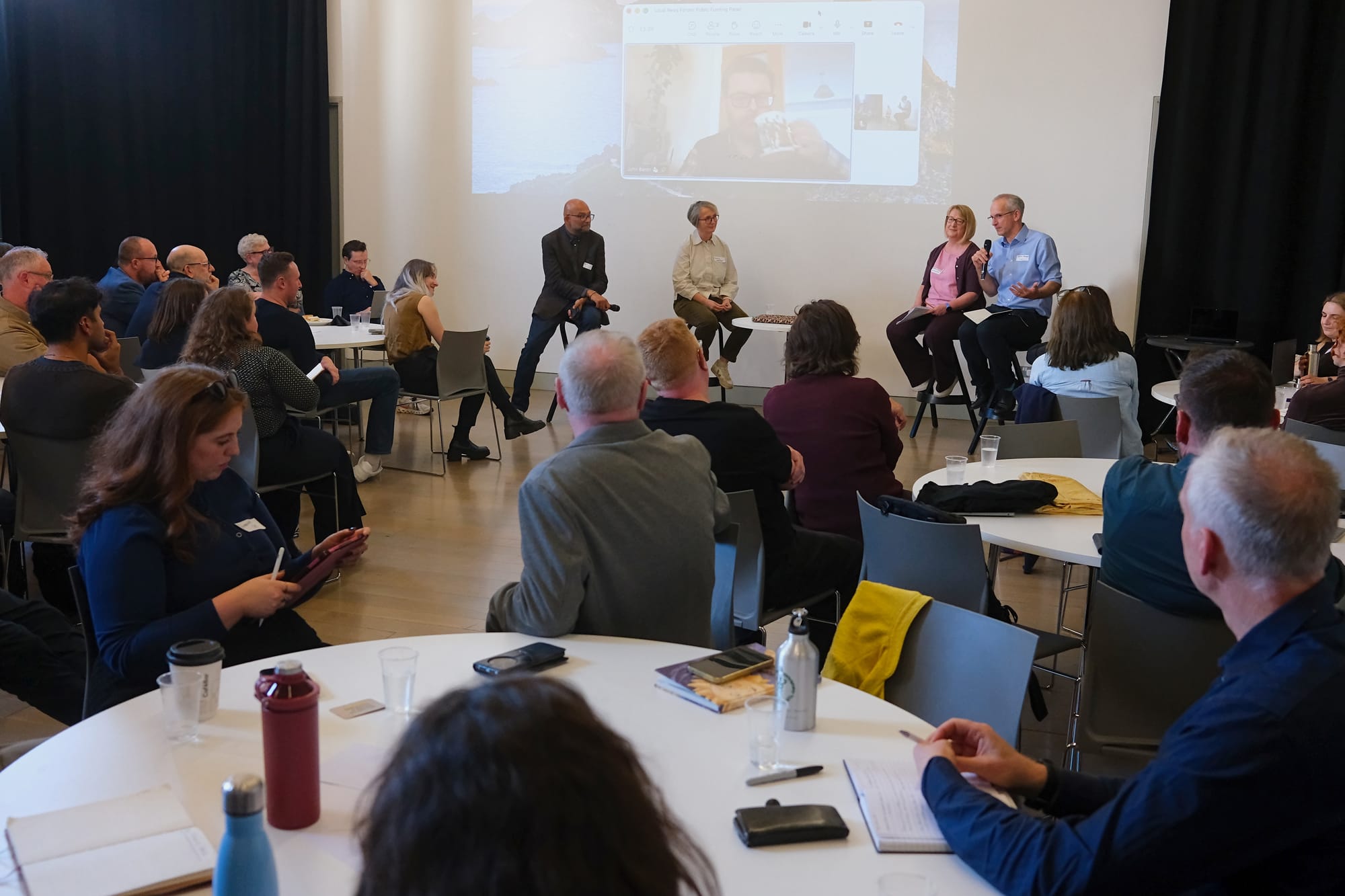
L: Trevor Birney and Denzil McDaniel | R: Jaldeep, John (video link), Sarah, AnneMaria and Jonathan. Image: Columba O'Hare
Unsurprisingly, the panel on local news funding chaired by PINF Executive Director Jonathan Heawood, featuring Jaldeep Katwala, AnneMaria McEneaney, Sarah Hartley and John Baron, drew quite a bit of engagement from attendees. In the UK, the Government’s £12 million across 2 years commitment is a welcome acknowledgement, yet remains some distance from the scale envisaged by PINF’s Local News Commission. The Republic of Ireland supplied a useful point of comparison, as McEneaney explained how following its Future of Media Commission, Coimisiún na Meán directed support towards areas like local democracy and court reporting as identifiable gaps in coverage, rather than towards a loosely defined promise of innovation.
Discussion of the first round of the DCMS Local News Fund, restricted to England and Wales and focused primarily on innovation and financial sustainability, brought up some practical concerns about accessibility. Panellists reflected on the complexity of the application process and the administrative demands placed on already overstretched publishers, and questions soon followed about whether such requirements might favour better-resourced organisations, and how a fund designed to address market failure could adequately support newsrooms operating in places where commercial sustainability is especially difficult to achieve.
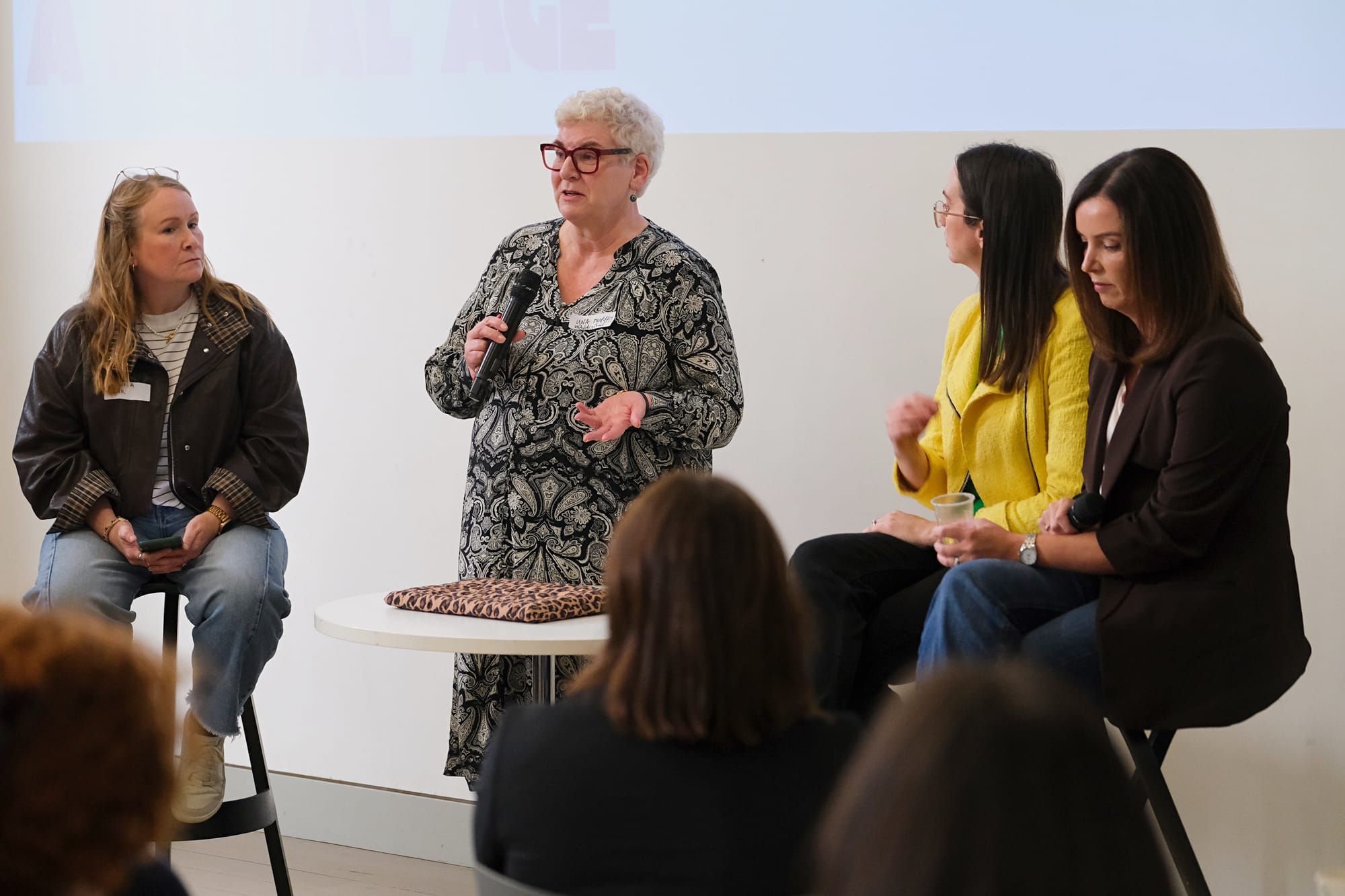
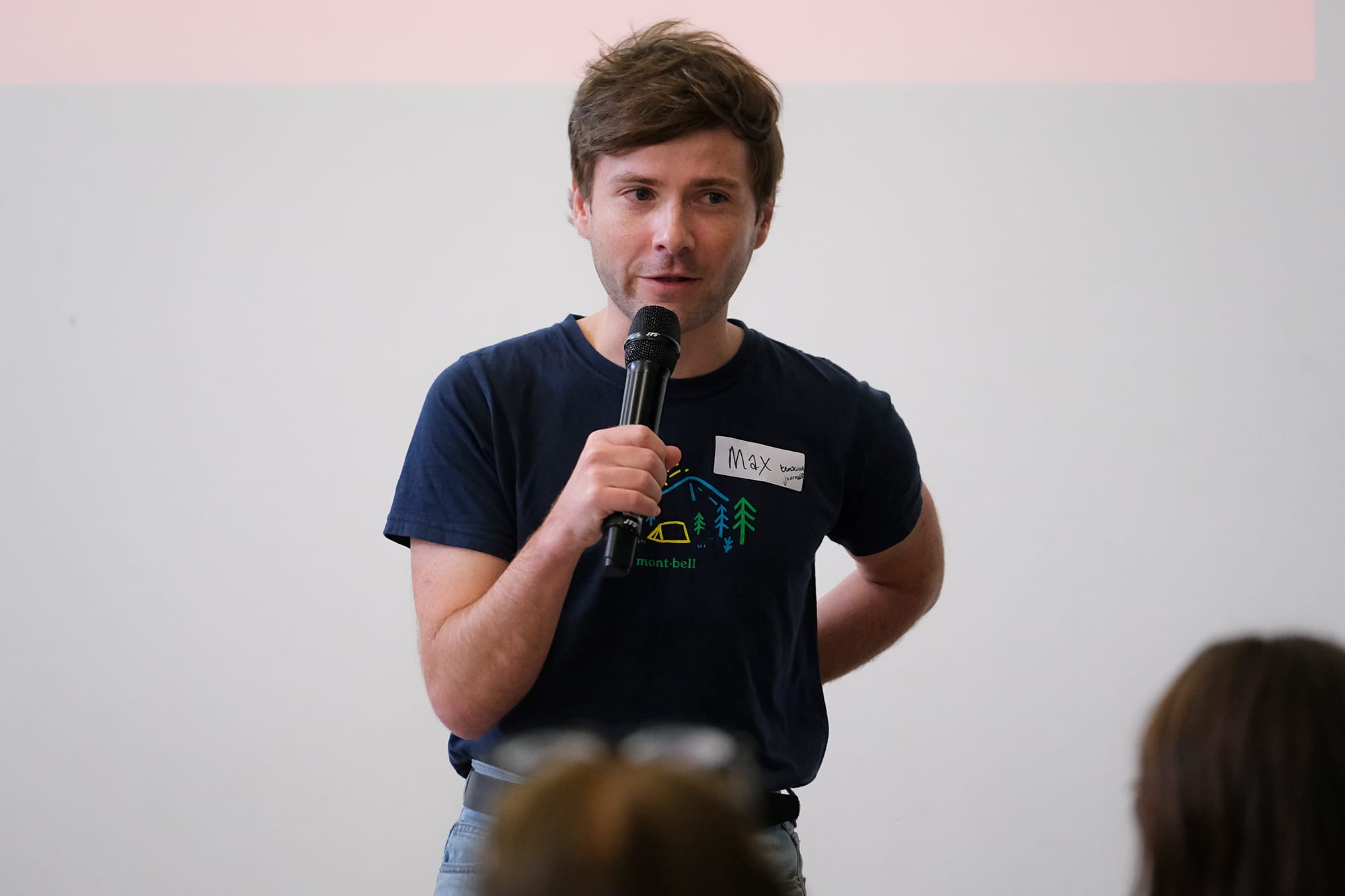
L: Shauna Corr, Una Murphy, Maeve Connolly and Orna Young | R: Maxence Peigne | Image Credit: Columba O'Hare
At Una Murphy’s panel on community cohesion with Orna Young, Shauna Corr and Maeve Connolly, Young recalled the early sectarian mobilisation on Facebook that helped prompt the establishment of FactCheckNI. She explained how the problem has only grown more troublesome since: inflammatory falsehoods circulate under the names of recognisable political figures, and a factual correction rarely has the same reach as the original claim.
The panel also explored journalist safety and resilience, and discussed The Detail’s investigation of the racist disorder in Belfast in August 2024, where FOI requests revealed that almost a quarter of those arrested had since been reported to police for domestic abuse, thus intervening in the invocation of ‘women’s safety’ by those seeking to justify violence against migrants. Connolly then explained some of the guidelines developed by Raised Voices CIC about reporting on refugees, people seeking asylum and ethnic minority communities.
Interviewee safety, careful language and responsible sourcing were among the practical concerns, and the panel also addressed the more discomfiting underlying question: why are some residents heard from only when their community becomes the subject of controversy, pointing out that refugees and other marginalised groups might have opinions about transport, schools, work and their local council as well as about facing bigotry, and how broader engagement can build the reservoir of trust, where the everyday record is taken as seriously as the moments of crisis.
Jaldeep Katwala, Director of the Lenny Henry Centre for Media Diversity, drew on research from the Centre to set out how representation in journalism is often discussed through staffing figures alone, yet only seldom do newsrooms ask whose experience shapes editorial judgement or is seen as deserving of promotion. Or even just who can best identify an omission because they know what ought to have been there, explaining how the composition of a newsroom influences the stories that never get proposed as much as those eventually published.
Further lightning talks took us in and out the newsroom. Michael Foster of Newsmast described a tripartite effort with Greater Community Media and the Bylines Network to build independent, decentralised digital spaces for publishers and news communities. Tenacious Journalist awardee Maxence Peigne showcased his investigation into illegal gambling websites, whilst Iram Cook-Monie introduced Inside Track’s work bringing the knowledge of industry insiders into journalistic public scrutiny. Azzurra Moores of Demos examined the wider information supply chain, including advertising and the BBC’s position in the news ecosystem.
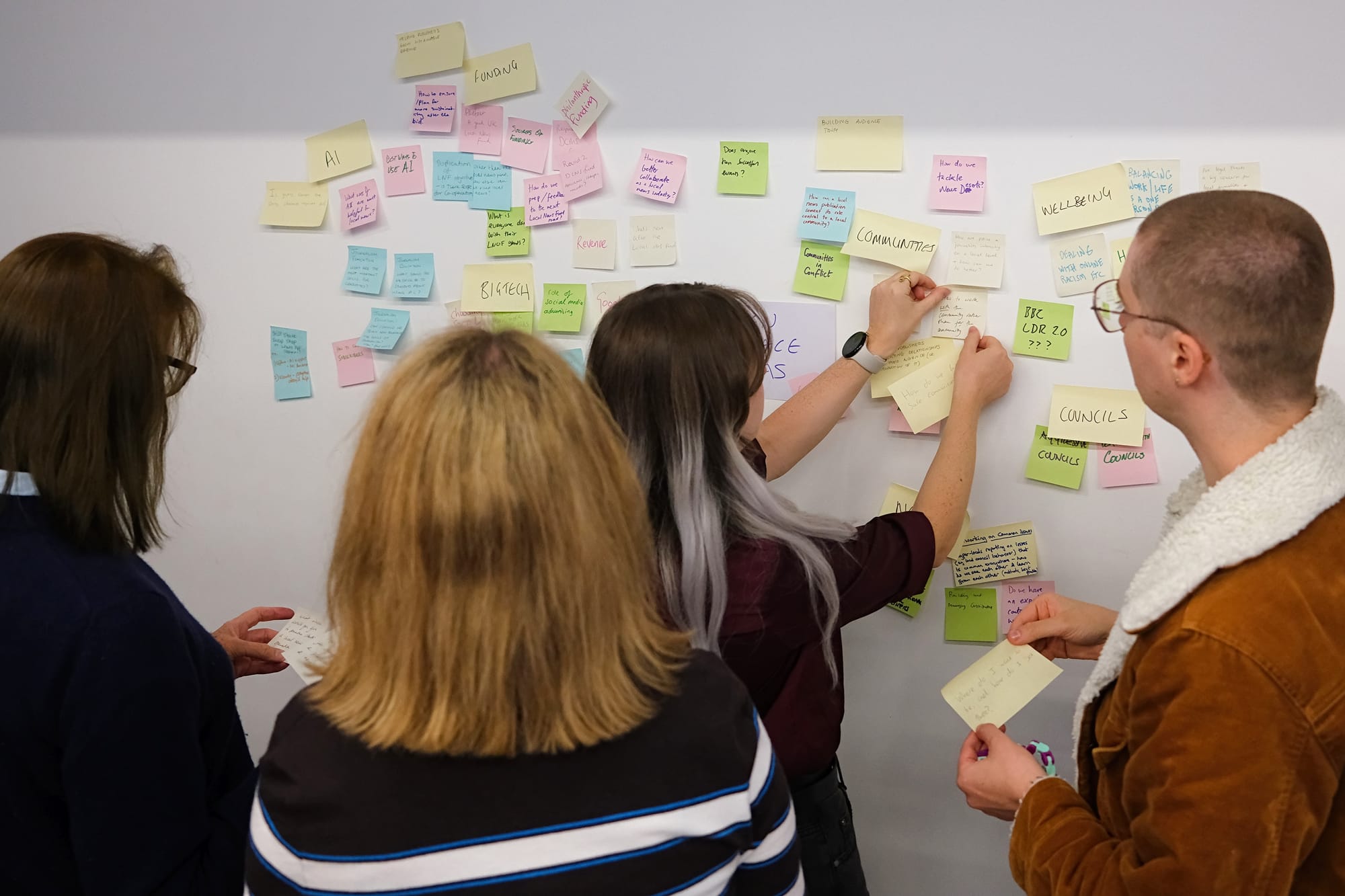
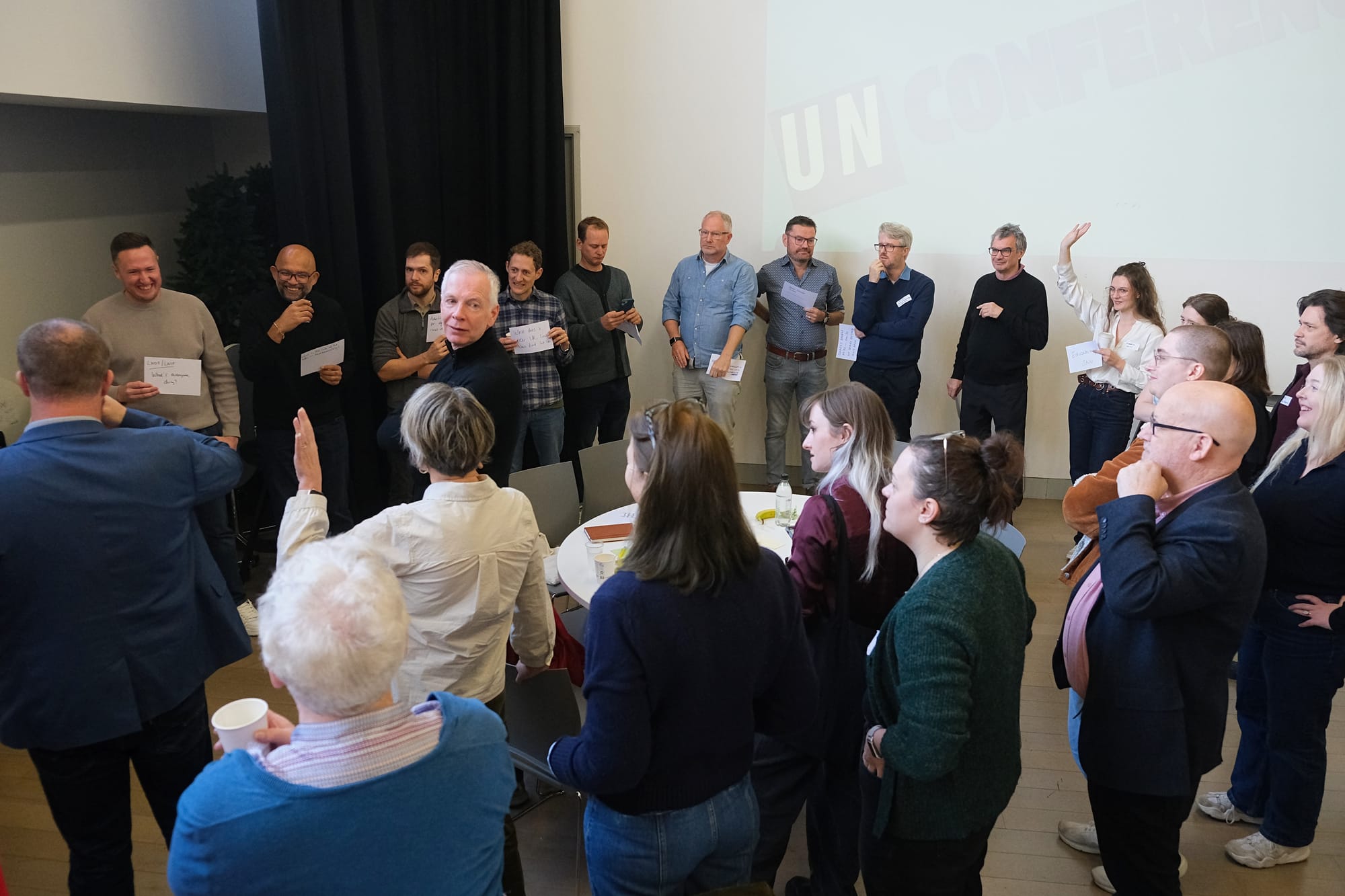
Image Credit: Columba O'Hare
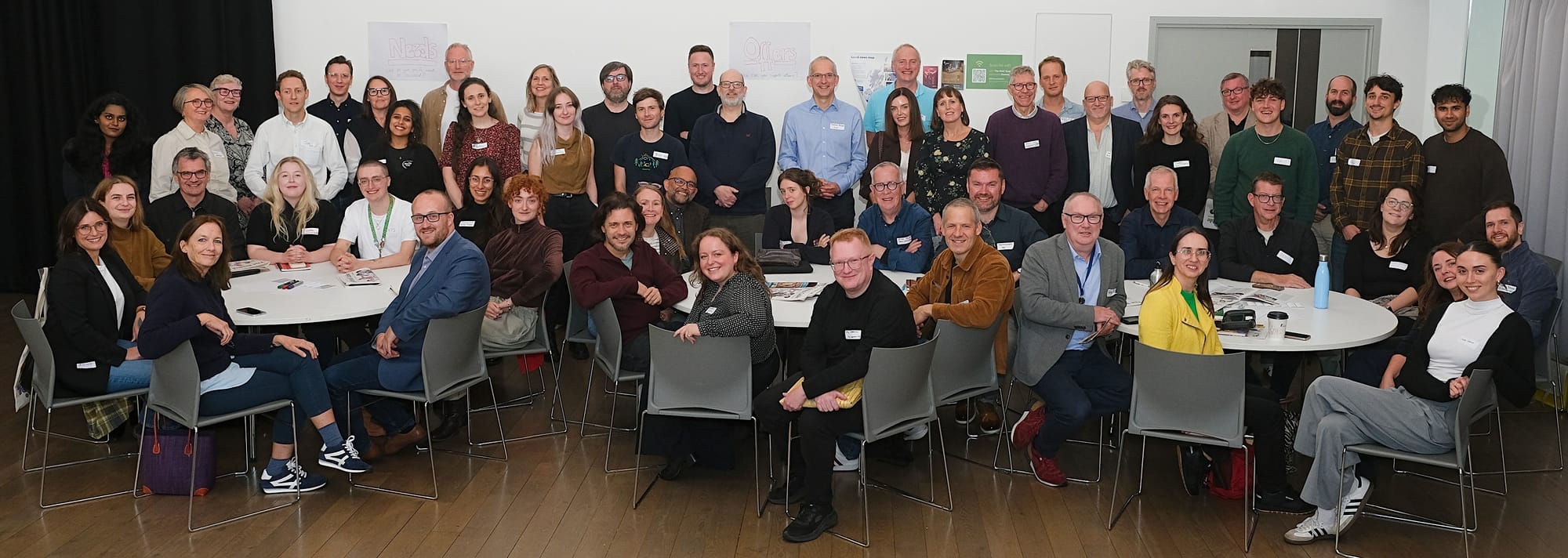
I think this year's Forum might well have been the best yet. There was a tangible buzz as participants caught up with old friends and made new ones - the headaches on Saturday morning playing tribute to the social on Friday night! Our amazing local(ish) host Kayley did an incredible job of facilitating a warm and open space - it's going to be a tough one to beat!
Beckie Shuker, Campaign and Communications Manager
On Saturday, the lightning speakers were followed by an ‘unconference’ session led by Beckie Shuker of PINF, in which attendees came up with an eclectic and effective agenda spanning AI, resilience and trauma-informed reporting, the role of the BBC, sustainability and advertising alongside several other topics, splitting into fluid session-groups across the morning. And all this after a Newsmast-sponsored Friday night social at the Northern Whig and beyond!
A big thank you to our speakers and everyone who made it to Belfast, to The Irish News, to the MAC, to our sponsors Newsmast and the Social Change Initiative for helping make this year's Forum possible, to our host Kayley Curtis, and to Columba O’Hare for the excellent photography you’ve been seeing. We’re going to start thinking about next year’s Forum very soon, so if you have an idea of where we should host it, get in touch and let us know!
Written by