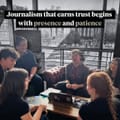
John Offord, leader of The Bureau of Investigative Journalism's Bradford StoryHub, unpacks the local project to create space for community-led journalism.
Over the past year, I’ve been leading the Bradford StoryHub, a community-led journalism pilot from the The Bureau of Investigative Journalism, working in partnership with Bradford Community Broadcasting and funded by the Joseph Rowntree Foundation.
The project was designed to explore a simple but important question: what happens when journalism is done with communities, rather than at them?
In an era where trust in media is fragile and misinformation spreads quickly, we wanted to create spaces where local people-particularly those from underrepresented backgrounds could shape their own narratives and contribute to public conversation.
What we did
The Bradford StoryHub focused on community engagement, storytelling, and media literacy.
Over the course of the year, we worked with a range of local organisations including community radio, refugee and migrant support groups, and equality networks. Through workshops and collaborative sessions, participants explored topics such as media representation, misinformation, and how to tell their own stories through writing, discussion, and audio.
One example was the “Reclaim the Narrative” workshop, delivered with community partners in Bradford. The sessions explored media stereotypes, disinformation, and how people can verify information and share their own perspectives.
We also worked with community groups to explore themes such as care, inequality, and everyday life in Bradford-supporting the development of a community-led newsletter that reflected lived experiences across the city.
Why this work matters
Many communities feel misrepresented or completely absent from mainstream media.
That absence has consequences. When people don’t see their experiences reflected in journalism, trust erodes. When trust erodes, misinformation fills the gap.
Community journalism offers a different model. Instead of parachuting in to report stories, journalists can create spaces where communities help shape the agenda, identify issues, and share their own knowledge.
In Bradford, this meant prioritising listening, relationship-building, and collaboration over traditional reporting outputs.
What difference did it make?
One of the clearest outcomes was participation.
Workshops were mostly well attended, and participants spoke openly about their experiences with media misrepresentation and misinformation. Many expressed a strong desire for more opportunities to learn about journalism and share their stories.
But perhaps the most important outcome was something less tangible: trust.
Trust is built slowly-through repeated conversations, cups of tea, and showing up consistently. Community members need to feel that their voices are respected, that their stories won’t be exploited, and that journalism can work in their interests.
That process takes time, but it’s essential if journalism wants to remain relevant to the communities it serves.
Lessons for newsrooms and policymakers
A few key lessons emerged from the Bradford StoryHub pilot:
- Trust is built through presence, not projects.
Relationships matter more than one-off engagements. Community journalism requires sustained interaction.
- Process matters as much as output.
Creating safe spaces for conversation and storytelling can be as valuable as the final article or broadcast.
- Flexibility increases participation.
Adapting workshop formats, times, and incentives to community needs makes a significant difference.
- Lived experience needs structural context.
Stories about poverty, care, or inequality often reflect broader systemic realities. Combining lived experience with evidence strengthens journalism.
What comes next?
The Bradford StoryHub was designed as a one-year pilot, and the project is now coming to an end. However, The Bureau of Investigative Journalism is exploring funding to continue the work and build on the relationships and foundations established during the pilot.
At a time when local news ecosystems are under immense pressure, initiatives like this offer a glimpse of what community-led journalism could look like in the future.
Because in an unsettled world, local voices and the stories communities tell about themselves have never mattered more.
To keep updated with the Bradford Storyhub, follow our free Substack.
 John Offord
John Offord is a freelance content producer, podcast maker and broadcast journalist. He was previously the leader of The Bureau of Investigative Journalism's Bradford StoryHub.
Written by